
Moving assets between locations, branches and companies without losing the trail
A transfer looks like a change of location in the register. Depending on where the asset goes, it can also be a GST supply, a disposal by one company and an acquisition by another, and a gap in your verification. A practical guide.
The most common transaction, and the most neglected
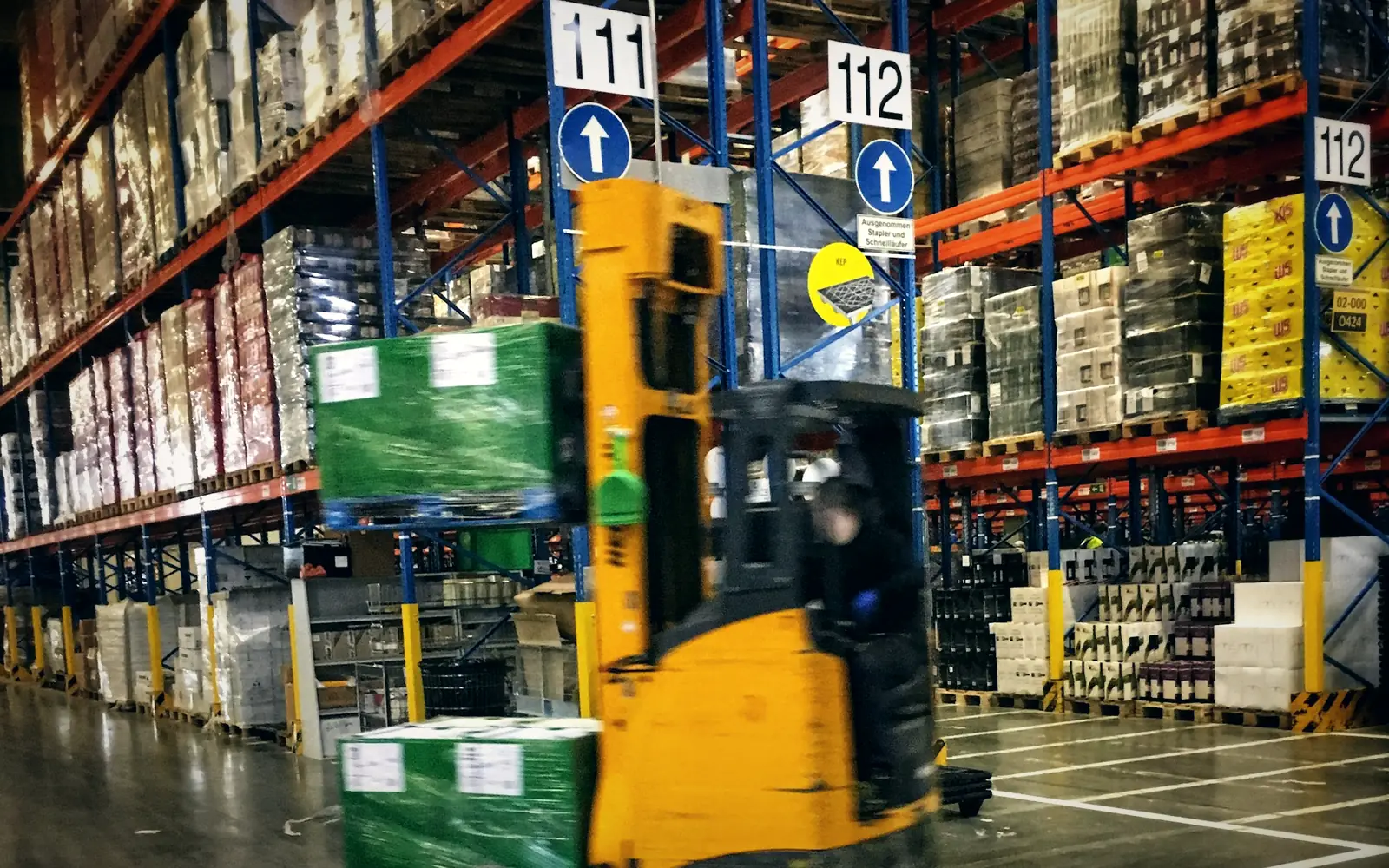
In a company with branches, stores, warehouses or project sites, assets move all the time. A laptop goes with an employee to another office; a forklift goes to a new warehouse; a generator is shifted to a project site; a machine is sent to a group company that needs it more.
Most of these moves never reach the fixed asset register. The asset is found in the wrong place at the next physical verification, the location is corrected with a note, and nobody can say when it moved or who approved it. That is the pattern the CARO 2020 verification and the auditor's existence testing are designed to catch.
This article sorts transfers into four kinds, because the obligations differ sharply between them.
Kind 1: a new custodian or room, same site
An asset changes hands within the same building or campus: an employee leaves and the laptop goes to a successor, a printer moves to another floor.
There is no accounting or tax effect. What matters is control:
- Record the handover with the new custodian's acknowledgement, and the return by the old custodian.
- Update the location to something a verifier can walk to: building, floor and room, not just "head office".
- For IT equipment, link the handover to the access and data-wiping steps your IT policy requires.
This is where most register errors begin, because the move feels too small to record. A simple handover form, signed on both sides, solves most of it.
Kind 2: another location of the same company, same GST registration
An asset moves between two places of business under the same GSTIN, typically within the same state: from a warehouse to a store, from one plant to another.
Accounting: no change in cost or depreciation, but the location, and possibly the cost centre or branch, changes. If depreciation is charged to cost centres or branches, the charge for the year should be split at the date of transfer, so the transfer date matters.
GST: moving goods within the same registration is not a supply, but the goods still need documents for transport. Rule 55 of the CGST Rules provides for a delivery challan where goods are transported for reasons other than supply, and Rule 138 requires an e-way bill for the movement of goods of consignment value above the prescribed limit (₹50,000 under the central rules) including movements for reasons other than supply. Several states set their own limits for movement within the state, so check the rule in the state concerned.
Control: the asset should be in transit, not in two places or none. Record the dispatch at the sending location and the receipt at the receiving one, and investigate anything that is dispatched but not received.
Kind 3: another branch of the same company, different GST registration
An asset moves from a branch in one state to a branch in another, each with its own GSTIN.
GST: under section 25(4) of the CGST Act, each registration is a distinct person. Under Schedule I, paragraph 2, a supply of goods between distinct persons in the course or furtherance of business is treated as a supply even without consideration. So an inter-state branch transfer of a capital good is a taxable supply, needing a tax invoice and an e-way bill where applicable. The value is determined under Rule 28 of the CGST Rules. Rule 28 generally uses the open market value; where the recipient is eligible for full input tax credit, the value declared in the invoice is deemed to be the open market value. The receiving branch can take input tax credit, subject to the usual conditions.
Because the sending branch is making a supply, consider whether the capital good is "removed" within the meaning of section 18(6) for the sending registration, and how that interacts with the tax payable on the transfer. This is a point of interpretation to settle with your tax adviser before the first transfer, not after.
Accounting and Income-tax: within the same legal entity, the asset stays in the same books and the same Income-tax block. The cost does not change because GST was charged on the transfer, provided the GST is recovered as credit at the receiving end. Record the location and branch change with its date.
Kind 4: another company in the group
An asset moves from one company to another, even if both are owned by the same parent.
This is a sale by one company and a purchase by the other, with everything that follows:
- Transferor: a disposal in the books, with a gain or loss; for Income-tax, the sale proceeds are deducted from the block, and if the block is exhausted or ceases to exist, section 50 may apply; GST on the supply, and the section 18(6) comparison for a capital good on which credit was taken.
- Transferee: an acquisition at the transfer price, a new put-to-use date, a new useful life estimate, and a new tag if the companies use separate numbering.
- Both: the price, as a related party transaction, may need approval under section 188 of the Companies Act, 2013 unless it is in the ordinary course of business and at arm's length, and may need to be disclosed under Ind AS 24 or AS 18. Where the transfer price matters for tax, transfer pricing provisions may apply. Check these with your company secretary and tax adviser.
Never record an inter-company transfer as a simple location change. The asset leaves one register and enters another, and both companies' auditors will look for it.
Insurance follows location
Property insurance policies usually cover assets at named premises. When significant assets move to a new location, check that the policy covers them there, and update the insurer if it does not. Assets in transit may need transit cover.
Transfers and physical verification
Transfers during a verification campaign are a frequent source of false discrepancies: an asset counted at its new location shows as "found elsewhere", while the old location reports it missing. Two practices help:
- Set a cut-off for the campaign. Transfers after the cut-off are recorded but not reflected in the count lists until the count closes.
- Treat assets in transit as a separate status, so they are neither missing nor present in either location's count.
The CARO 2020 physical verification guide covers cut-off and outcome rules in more detail.
A transfer checklist
Before approving a move, check:
- Which kind of transfer it is: same site, same GSTIN, different GSTIN, or another company
- The documents needed: handover form, delivery challan, tax invoice, e-way bill
- Who approves: the sending and receiving managers, and finance for kinds 3 and 4
- The transfer date, for depreciation allocation and the verification cut-off
- The new location, custodian and cost centre in the register
- Insurance cover at the destination
- For kind 4, the related party approvals and the disposal and acquisition entries
How FixedAsset Pro handles transfers
In FixedAsset Pro, Asset Lifecycle records moves between employees, departments, locations, branches, companies and cost centres, including split transfers, each through an approval chain you design, and keeps the asset's history. Location, custodian and tag are locked once in use in the register, so a move can only happen through a transfer or assignment transaction. Custodian handovers produce a printable acknowledgement. During a verification campaign, assets found at the wrong place are classified as Found Elsewhere and can be resolved by creating a transfer from the reconciliation queue. Keep the challan, invoice and e-way bill references with the transfer so the trail is complete.
This article is general information as at October 2026, not tax or legal advice. GST treatment of branch transfers, e-way bill limits and related party approvals depend on your facts and the current rules; check with your tax adviser and company secretary.
Tags
- asset-transfers
- gst
- e-way-bill
- custodian
- asset-lifecycle
- fixed-asset-management
- physical-verification
- wholesale-distribution
- logistics-warehousing
- retail
- banking-financial-services
- multinational-enterprises
- asset-manager
- operations-manager
- it-manager